 Cannabis Use Linked to Better Social Skills in Psychosis Cannabis Use Linked to Better Social Skills in Psychosis
Systematic review of the antipsychotic properties of cannabidiol
When attempting to understand current cultural conditions knowledge of past economic, social and political process is mandatory.
Understanding political forces that lead a nation towards fascism,communism or toward a socially liberal democractic republic is essential.
Individual motive or intent (agency) is typically airbrushed from the political narrative because human action is deemed to have been shaped by the dead weight of history or forces beyond individual human control.
Psychopaths in leadership positions may seem to lead a cultural astray.
Why would a sane culture elevate psychopaths into positions of power?


Yupik Eskimos apply the word Kunlangeta to a man who repeatedly lies, cheats, steals, takes sexual advantage of many women.
Kunlangeta do not pay attention to reprimands.
How do the Yupik deal with Kunlangeta ?
“Somebody would have pushed him off the ice when nobody was looking.”
Inuit Cartography
The Book of Wisdom for Eskimo
Indigenous Perspective on Mind and Morality
Psychopathy is difficult to discern in the individual that studies human behavior and mimics it.
As all social behavior is learned through mimesis only careful observation reveals the difference between the psychopathic individual that observes human emotion and mimics it and the revelation of true emotion.
In a Gesellschaft community emotion must be masked unless one wants to become a target of the psychopathic predators.
300 BC Theophrastus defines the basic characteristics of psychopathy in his study The Characters.
1800 AD This fearless condition came to be referred to as manie sans délire (“insanity without delirium“), a term that evolved into moral insanity, the key symptom of which is a “defective conscience.”
1941 Dr. Hervey M. Cleckley of the Medical College of Georgia systematically defines a psychopath:
A person without a conscience who feels no empathy, remorse or guilt and who lacks the ability to experience a wide range of human emotions.
Emotions are confined to a narrow range of primitive proto-emotions such as anger, frustration and rage.
Psychopaths – charming, charismatic, popular and admired – pathological liars and expert manipulators victimizing family, friends and strangers.

Polygraph tests register physiological stress responses to the anxiety of lying.
Psychopaths lies register no different than baseline emotion.
Psychopaths, not mentally ill nor delusional, are rationally dissociated and intelligent, but lack the emotions that befuddle normal people.
Psycopaths have no fear of consequences and enjoy risk as they need novelty, stimulation and living on the edge to compensate for their emotional vacuity.
Psychopaths, prone to grandiosity, engage in moral reasoning that is glib and superficial and blame others for the consequences of their actions.
Psychopaths, like empaths, are able to accurately read emotion and gauge weak points with fine precision as they have no emotion to cloud judgement.
A focused predatory rational consciousness can identify characteristics not entirely survival driven and use those characteristics to manipulate victims.
Psychopaths, extremely convincing, pass polygraph tests with ease.


In the presence of a psychopath empaths frequently report that the air seems to crackle with electricity as their hearts began racing and they move to the edge of their chair ready to flee or fight.
This may be an ancient intraspecies predator-response system in which the empath recognizes the psychopath as a Soulless One.
Skull & Crossbones claims psychopathology isn’t a “cognitive disorder” at all, but is more accurately considered an adaptive, evolutionary trait.
In societies where most people are inhibited by a conscience, a finely tuned, camouflaged predator can find an adaptive niche.
Successful evolutionary adaptation hinges on sexually active Reptilians being more promiscuous than non-psychopathic Mammalians.
The frequency of Reptilian sexual transactions, uninhibited use of coercion,tendency to shuffle Mammalian partners allows them considerably better than average advantage of passing along cold blue blood genes.
A culture with psychopathic tendencies may cause people to respond in a psychopathic manner who might otherwise be restrained from doing so.
Permanent war requires Reptilian leaders as most soldiers that embrace psychopathic action are tormented by profound feelings of guilt and remorse.
Street and motorcycle gangs, organized international Reptilian families andcorporate boards of directors all hail from psychopathic anticultures.

Paul Babiak and Robert Hare note in their book “Snakes in Suits: When Psychopaths Go to Work” that psychopathy and sociopathy overlap.
Note the following patterns of behavior:
grandiosity;
megalomania;
egocentricity;
anti-social behavior;
superficial charm;
sense of entitlement;
avoidance of responsibility;
lack of empathy and remorse;
impulsivity and a parasitic lifestyle;
an inability to manifest a normal range of human emotions;
adept at manipulation, schmoozing, networking and conning.

Core psychopathic personality traits seem attractive in job applicants:
assertiveness;
apparent emotionally stablity;
ability to appear genuine when faking sincerity and honesty;
ability to quickly assess vulnerabilities of people and manipulate them.
The changing nature and structures of corporations favor psychopaths as corporations become less hierarchical, lean, more complex and flat.
Superficial notions of effective management focus on pyramidal hierarchyand exercise of top-down decision-making but avoidance of accountability plays right into the hands of a play-by-the-rule-book psychopath.
The devolution of accountability to “lower” management levels is attractive to Reptillians who want power but not proportionate accountability.
Reptillians, adept at keeping low profiles and scapegoating others, take the spotlight and credit for the work of others when positive outcomes occur.
Ruthless and devoid of empathy they believe that “respect” and “trust” can be bought and sold through “favors granted”.
Reptillians avoid daylight and transparency and fear close scrutiny.
They are willing to ignore ethical practices in management, legalities which they find cumbersome and constraining.
Engaging in preemptive attacks when the opportunity presents itself whilehiding in plain sight in fast-paced and ultra-competitive organizationsReptillians resent, envy and try to extinguish, those traits and capabilities they do not possess whether intellectual or emotional.
Although Reptillians typically make up about 3% of most populations, they are disproportionately represented in the capstones of management, politics, media, academia and religion.

“The supporting “social capital”, or institutions and relationships of capitalism, in order to generate new markets, effective and profitable demand, celebrate narcissism, conspicuous consumption, ultra-individualism,living-in-the-moment myopia, wanting it all and wanting it now, “fake it till you make it“, “dress for success“, networking, style over substance, shallow affect, rat-race competition; all of which are values and behaviors not only typical of psychopaths and sociopaths, but also, what they feed and nurture on.
This leads to some cross-cultural and comparative systems issues that would be interesting to explore: whether the typical 3% of total populations that are sociopaths and psychopaths in many cultures and systems, are more or less represented in more communal and less individualistic and less competitive systems and subcultures.” – James M. Craven

Alexis de Tocqueville |
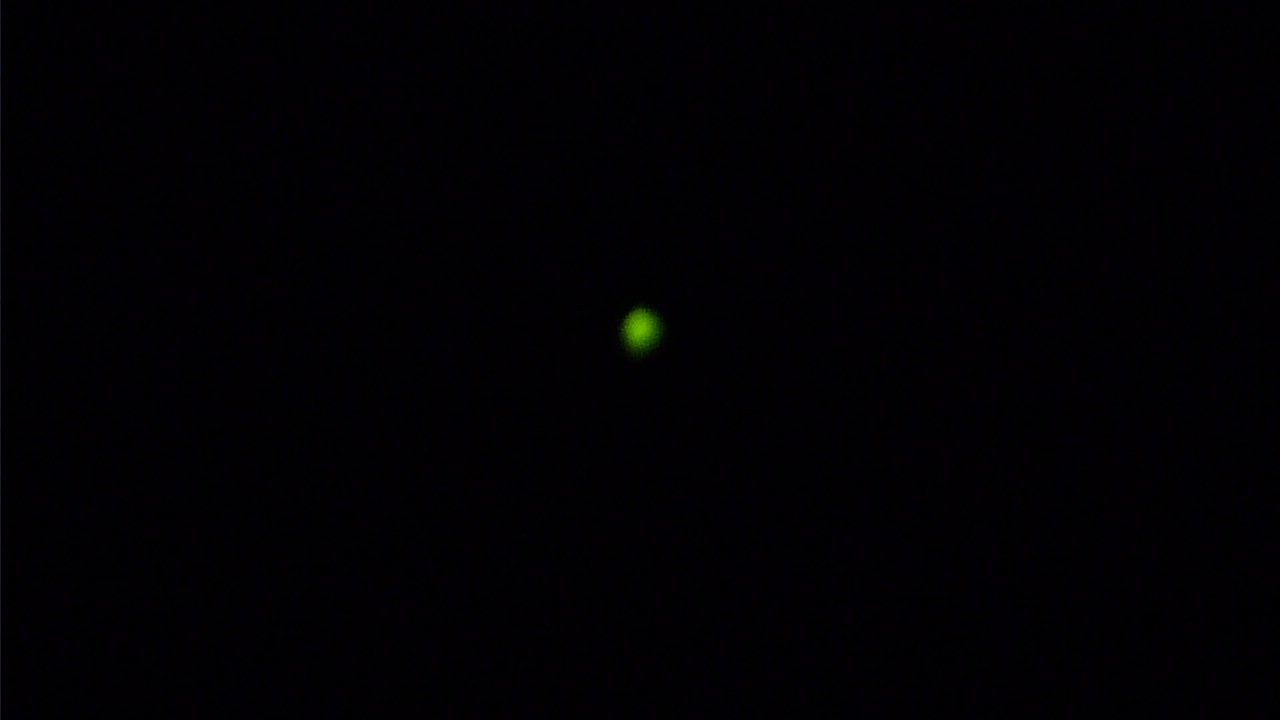 It lit up, pulsing, under incoming microwaves. You tell me what was happening.
 This individual (or his wife or both, they are a psychopathic couple) have shown up multiple times (15-20??), within 20 feet of me, within hours of serious arrhythmia episodes. This was later in the same day. No further comment.


 The Path Whisperer